Plantain: Identification, Foraging and First-Aid Uses
A practical guide to broadleaf and ribwort plantain: how to identify both, where to forage them in the UK,...

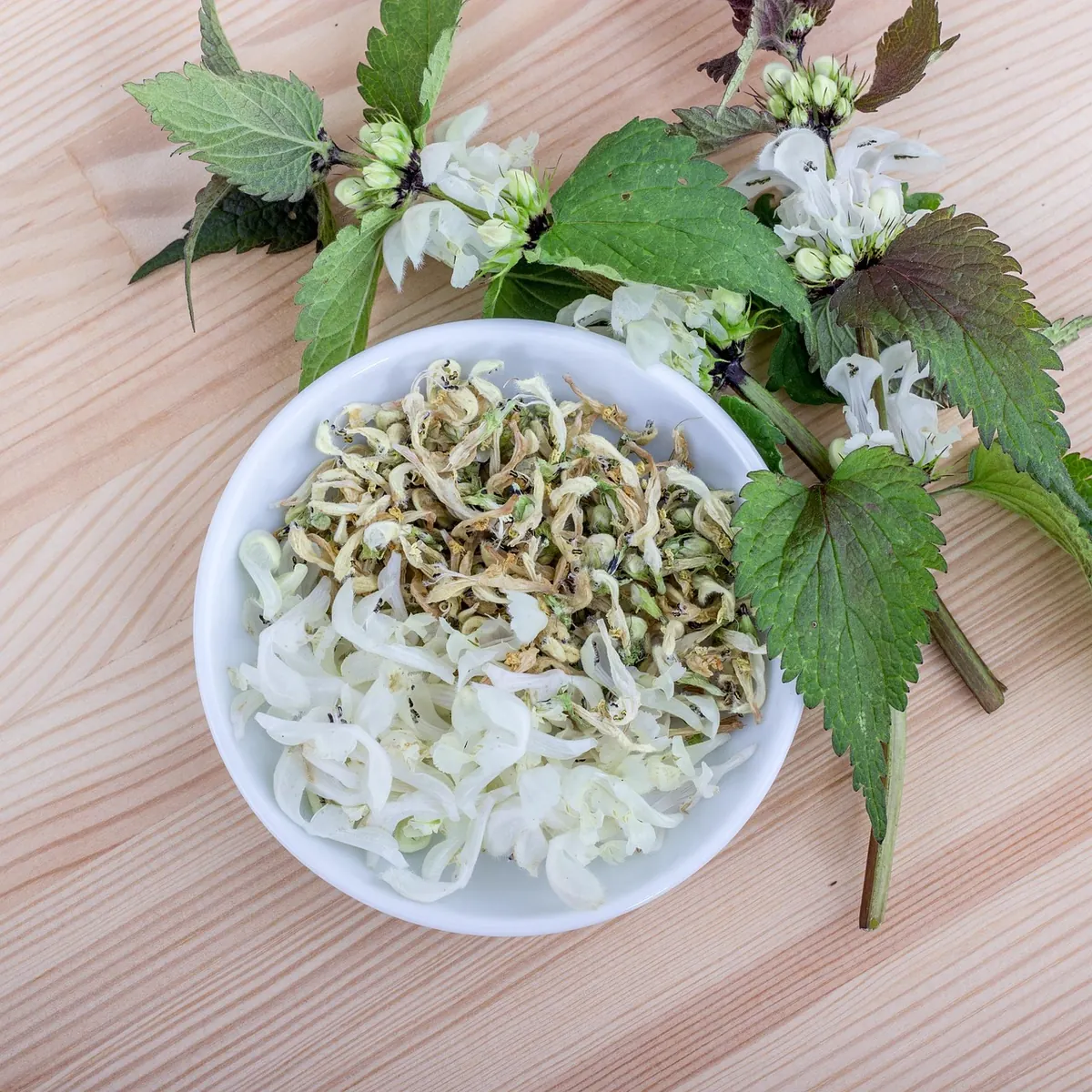
You have found a recipe for nettle infusion, but the garden is full of fresh nettles and the cupboard holds a jar of last autumn's dried leaves. Or there is a bunch of mint wilting on the windowsill and a recipe that asks for a teaspoon of the dried stuff. The swap looks simple. It rarely is.
Fresh and dried herbs are not the same ingredient in different clothes. Water content, volatile oils, storage and preparation all change what ends up in your cup or jar. Here is how to decide which to reach for, and how to adjust when you only have the other one to hand.
Fresh plant material is largely water. That single fact explains most of the practical differences. Weight for weight, dried herbs are far more concentrated, so a straight teaspoon-for-teaspoon swap will usually give you a weaker brew than intended.
A common rule of thumb in herbal practice is roughly three parts fresh to one part dried for leafy herbs. If a recipe calls for one teaspoon of dried peppermint, a tablespoon of chopped fresh leaves lands you in the right region. Treat that ratio as a starting point rather than a law. It tells you about mass, not about chemistry.
Drying concentrates minerals, tannins and mucilage, which is why a dried nettle or raspberry leaf infusion can taste so robust. But the aromatic volatile oils — the compounds behind mint's coolness and rosemary's resinous punch — evaporate or oxidise as the herb dries and ages. A well-stored jar of dried mint can still make a flat cup of tea.
Your nose is the best test you have. Crush a leaf between your fingers and smell it. Bright, sharp and clearly recognisable means it is still worth using. Dusty and hay-like means it has gone, whatever the label says.
A fresh leaf infusion wants a little more attention. Chop the leaves finely and bruise them with the back of a spoon to break down cell walls, then pour on just-boiled water, cover the cup and leave for about ten minutes. Strain and drink it the same day. Fresh infusions spoil quickly, so refrigerate any leftover and use it within a day at most.
Dried leaf infusions keep a little better, but the same twenty-four-hour rule in the fridge is sensible. For roots, barks and seeds, make a decoction instead: simmer gently for fifteen to twenty minutes, then strain. Dried material is the default here for good reason.
Tinctures follow a similar logic. Fresh plant material carries water into the jar, so it generally needs a stronger alcohol to preserve it, while dried material can be worked with a lower strength. Follow a tested recipe rather than guessing at percentages — this is one area where improvisation tends to waste good herbs.
Oil infusions are the opposite case. Fresh herbs introduce water into oil, and water in oil invites mould. Either wilt fresh herbs for twelve to twenty-four hours first or use dried material, then warm gently, strain and store somewhere cool and dark.
If you remember only one thing: water is the enemy of oil and the friend of tea.
Dried leafy herbs and flowers are usually at their best for around a year. Roots, barks and seeds hold on for two to three years. Keep them in airtight glass jars in a dark cupboard away from the stove, and buy or dry in small enough quantities that you finish them while they still smell alive.
Fresh herbs keep a few days in the fridge, wrapped in damp paper or stood in a glass of water. Freezing works well for some uses — chop the leaves into an ice cube tray with water or oil and drop a cube straight into the pan. The texture will not survive, but much of the flavour does. Mint and nettle freeze better than delicate flowers.
Theory only goes so far. Pick one herb you use regularly — peppermint or nettle are good starting points — and work with it in both forms over a season. Write the date on every jar. Note whether you used fresh or dried, how much you used and how the result tasted a week later.
Within a few months you will have your own reference that beats any general rule, including the ones above. Fresh and dried are tools, and the right one depends on what you are making and what is in front of you.
One sensible caution: herbs are not automatically safe because they grow in a garden. Some interact with prescription medicines, and many are unsuitable during pregnancy or while breastfeeding. If you are on medication or managing a health condition, speak to a qualified herbalist or your GP before starting. And never pick from the wild unless you can identify the plant with absolute certainty.
Photo: FinjaM / Pixabay
A practical guide to broadleaf and ribwort plantain: how to identify both, where to forage them in the UK,...
Cold water draws out the delicate aromatics and soothing gels that heat destroys. Here is how to make a...
A month-by-month guide to UK foraging, from March nettles to winter jelly ear, with practical picking...